By Amanda Holmes, Executive Director of the Fishtown Preservation Society, Inc
As a kid, my introduction to fish was like many of my generation: fish sticks, tuna fish sandwiches, and tiny shrimp mixed with Campbell’s soup as a casserole base. My grandfather was an avid inland fisherman. I loved my grandparents but dreaded visits to their house in Indian River, Michigan, because whole fried fish greeted us on the table for breakfast. And the bones — I feared the bones.
It wasn’t until I lived in Germany for six months after graduating from high school that I experienced fish in a transformative way. I was working as an au pair near Dusseldorf and, in addition to caring for four young children, my duties included trips to the markets to shop for dinner. I faced an array of unimaginable creatures and not only had to buy them, but I also then had to cook them, too. The trips to the markets and the food I bought and cooked became a solace in a difficult situation, where a marriage was breaking up and the children were aware that there was something wrong. The children and I cooked together, all of us in the kitchen navigating an increasingly strange and uncertain world.
Once back home, seafood faded to the background. It wasn’t until I started working for Fishtown Preservation Society in 2007 that buying and preparing fish became a type of ritual again. While taking care of other things in Fishtown, I often pause at Carlson’s Fishery and see what fish just came in. I make fish at least once a week for my husband and me. It is also my absolute favorite food to prepare when I have company for dinner. I make it for guests because it’s so delicious and because there is no easier meal to make. If it’s summer, we gather on the farmhouse porch. I always serve 9-Bean Rows‘ fresh greens as a salad and local wine or beer, too. If learning to like new foods comes through environment and taking time to prepare and enjoy it, then I’ve helped bring an appreciation of Great Lakes fresh fish to a lot of family and friends.
For this blog, I bought and prepared Great Lakes whitefish, using an easy recipe described below. Its story is like most of the fish that I’ve prepared over the years while working as the executive director of the Fishtown Preservation Society, the non-profit that owns and cares for the core historic parts of Fishtown in Leland, Michigan. During fishing season, I keep alert for when Joel Petersen, captain of the FPS’s trap net vessel, the Joy, might be heading out of Fishtown and into the Manitou Passage. That’s where, each year, he sets up to 10 trap nets that he checks throughout the season. The Cove Restaurant has a webcam overlooking Fishtown, making it easier to watch the Joy‘s movements; access the webcam on YouTube.
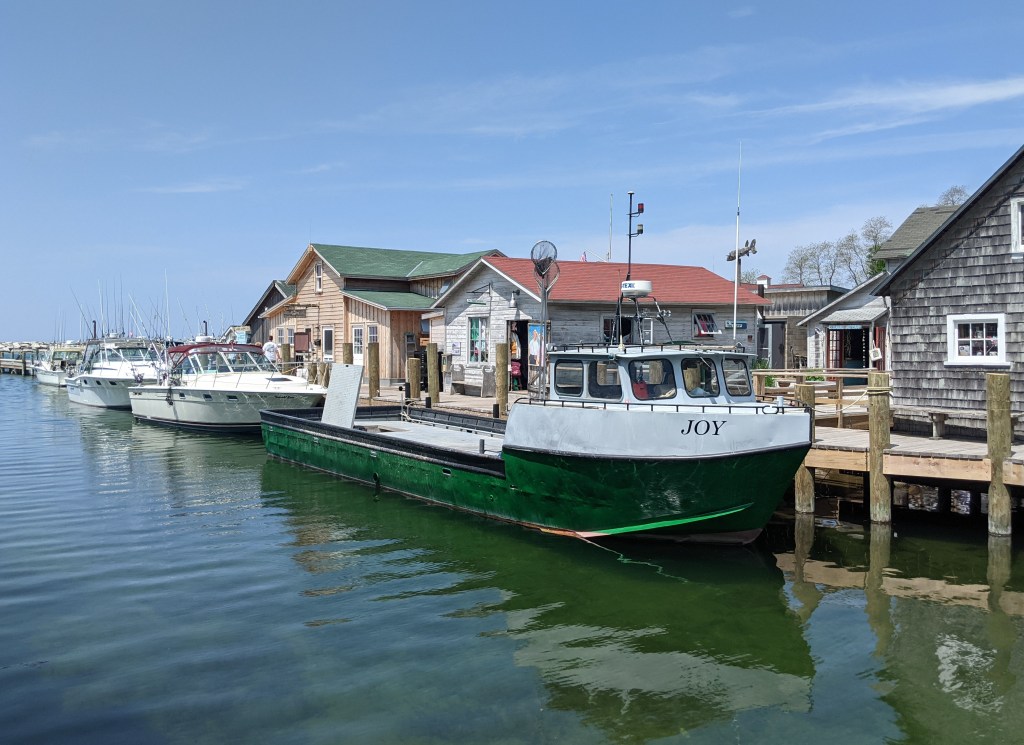
The specific fish that I prepared for dinner was caught on Friday, June 2, about five miles north of Leland. I bought it freshly filleted at Carlson’s Fishery within a few hours of its arrival in Fishtown. I love knowing who caught it (Captain Joel Petersen), who cleaned it (Mike Burda — yeah, no bones!), and who selected and wrapped it for me (Cassie Burda). Sometimes the whitefish comes from other state-licensed commercial fishermen, like the Petersen Fisheries in Muskegon or Serafin Fisheries in Pinconning – and I know these fishermen personally, too. State-licensed commercial fishermen are not licensed to catch lake trout, but I also know who catches most of the lake trout I enjoy, too: Bill Fowler, a local tribal fisher from the Grand Traverse Band.
I’m not saying your meal will taste better if you know who caught it for you. But if you are getting your fresh fish locally from a place like Carlson’s, you are connected to a tight community and supporting small family businesses and family legacies. Then again, if you get to know the families who catch and process your fish, the next fillet of whitefish you eat might just be the best fish you ever tasted.
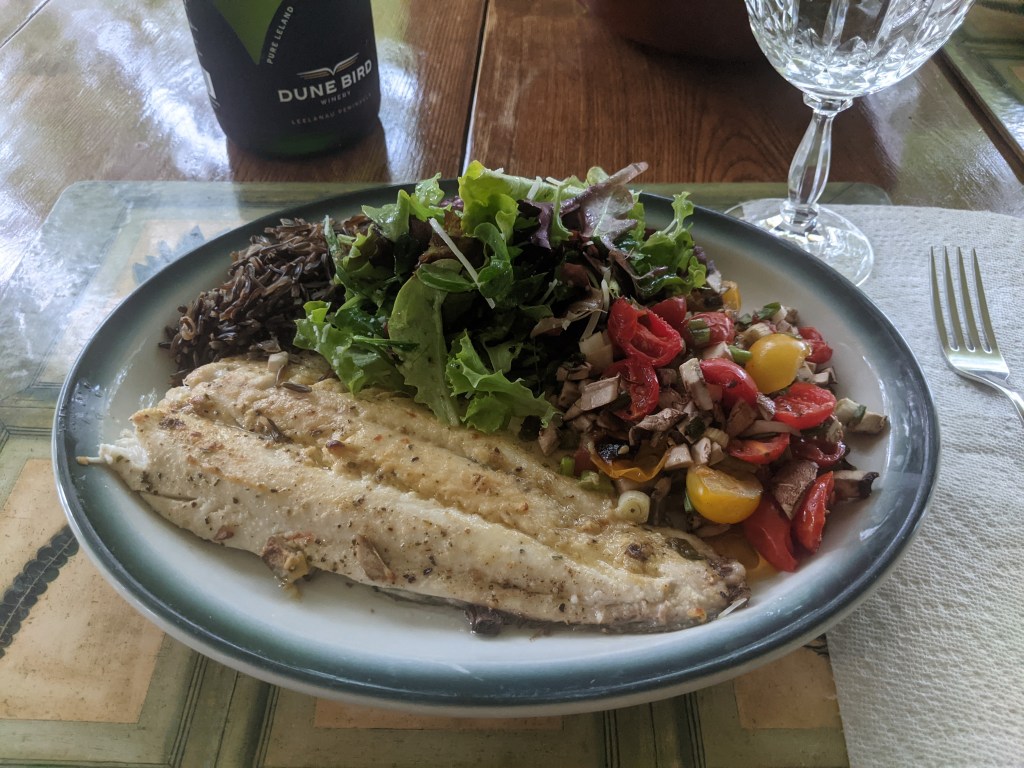
To whet your appetite, here are pictures of the Great Lakes whitefish dinner I describe below:
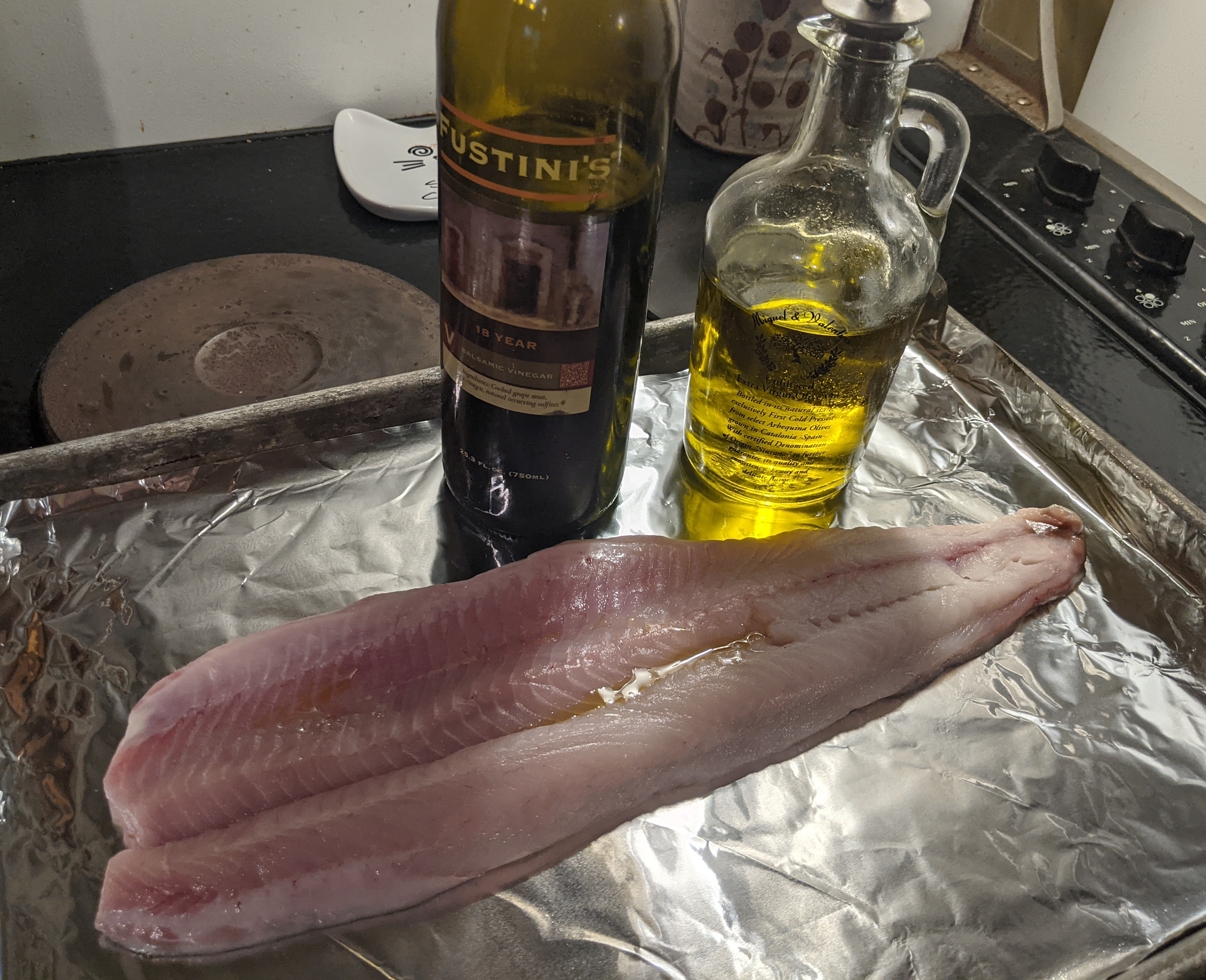
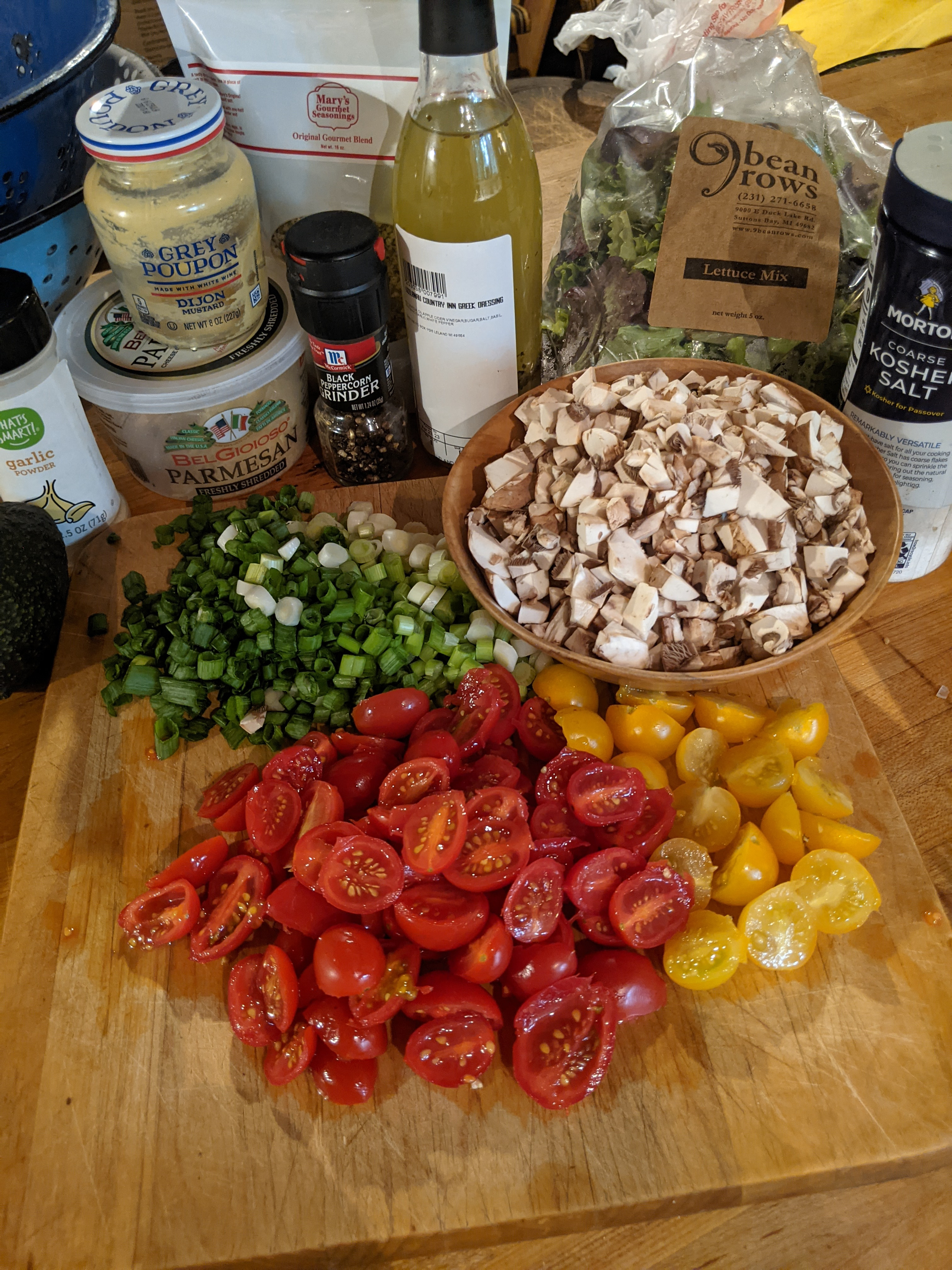
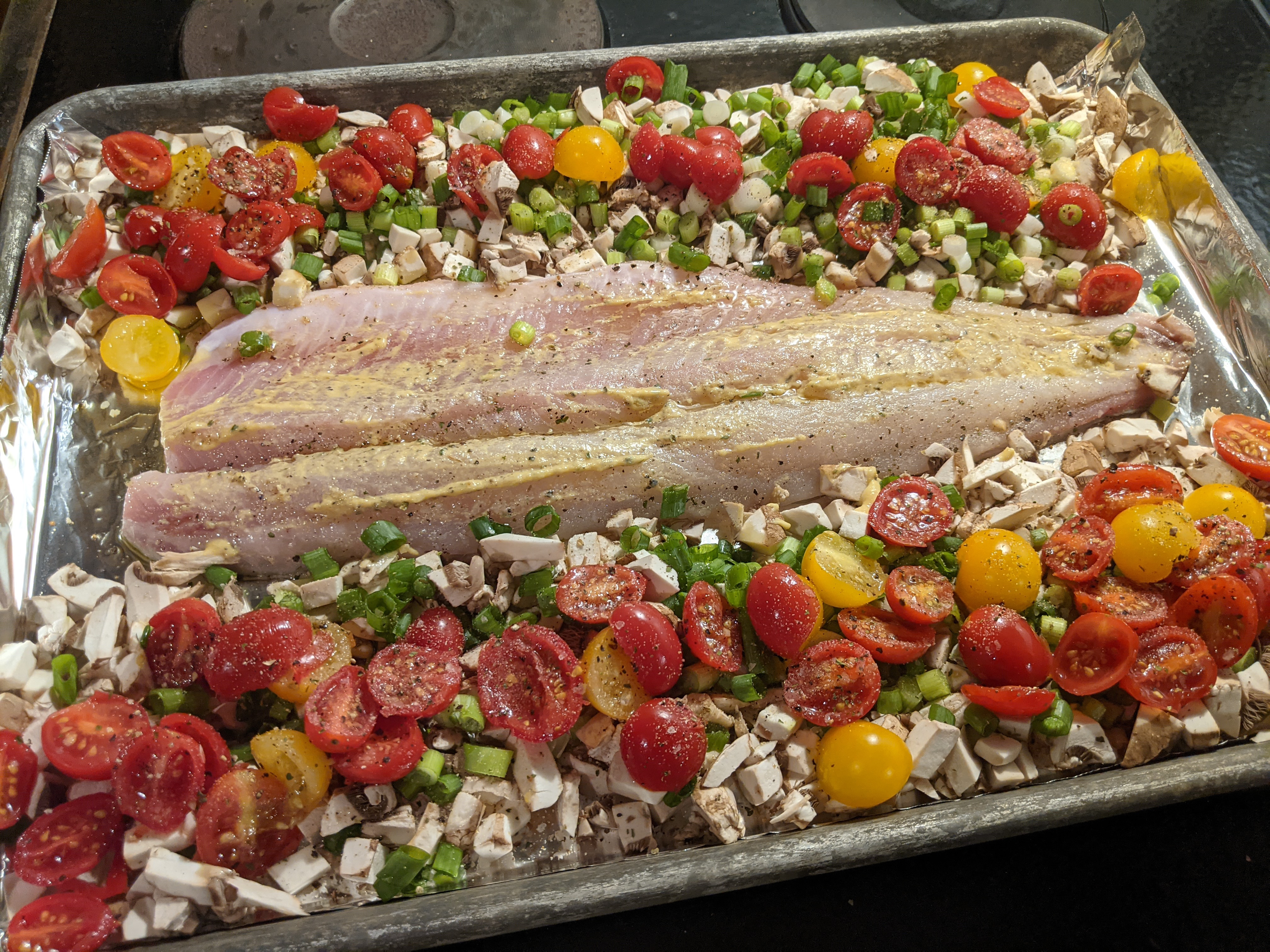
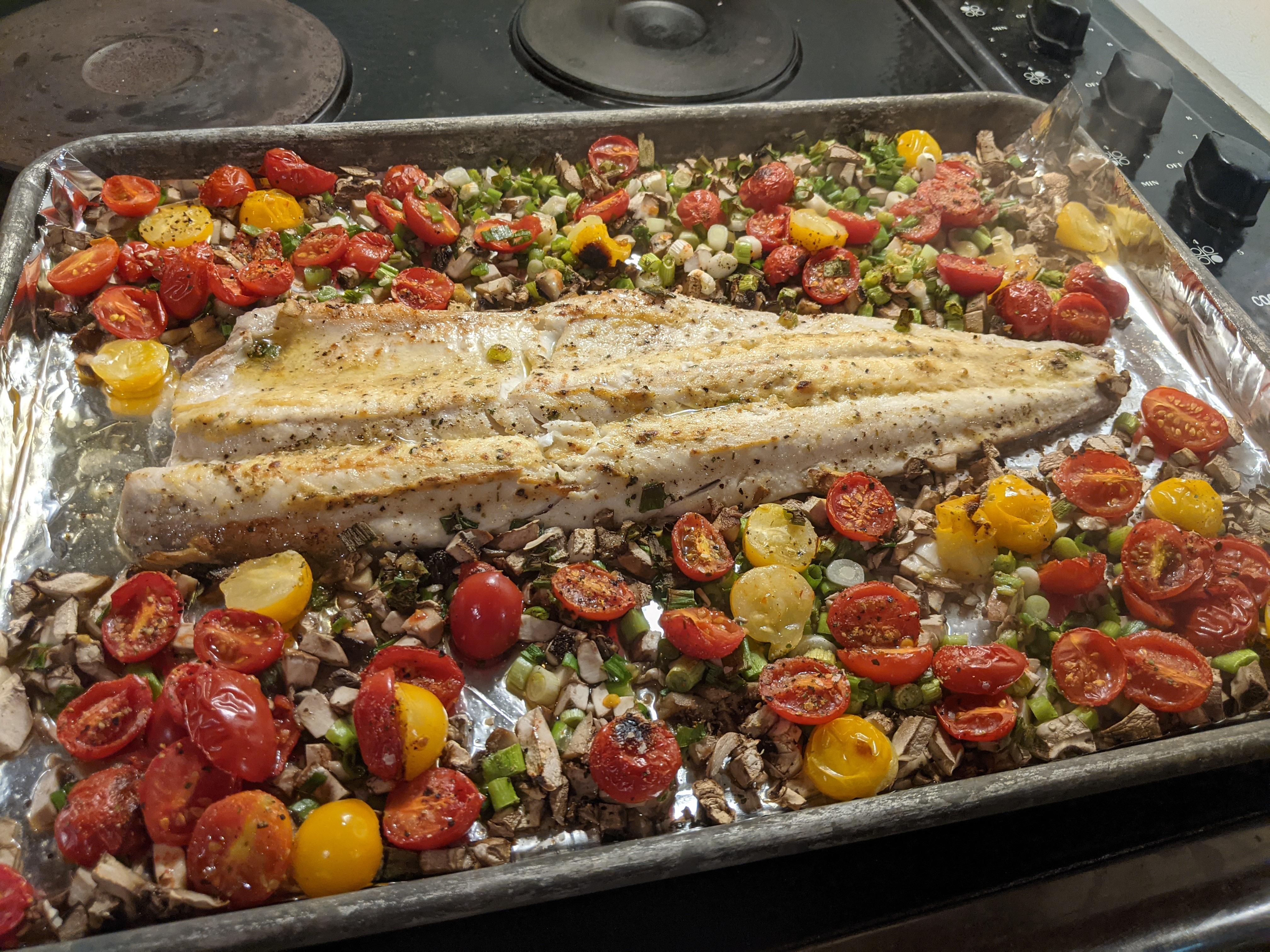
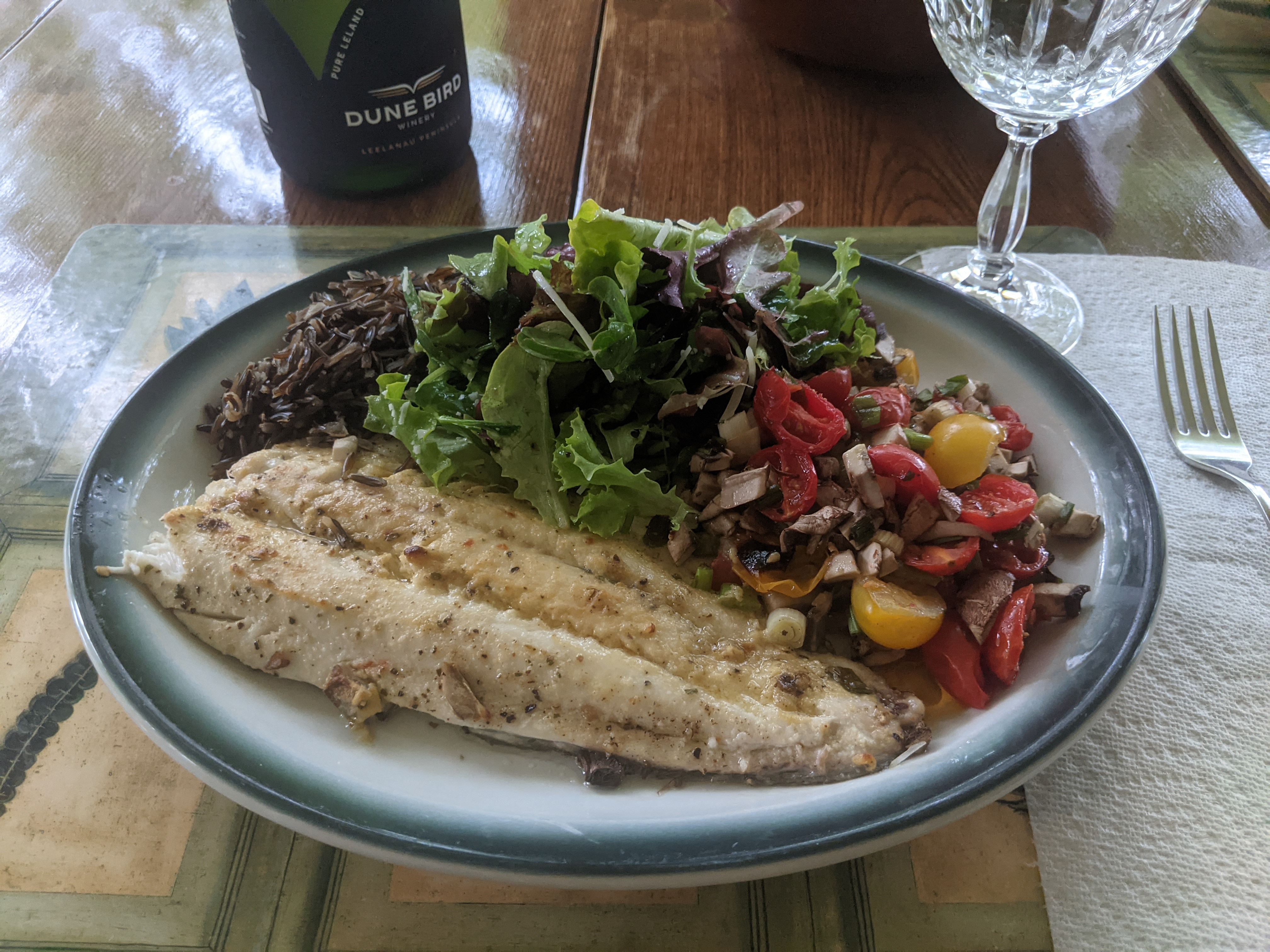
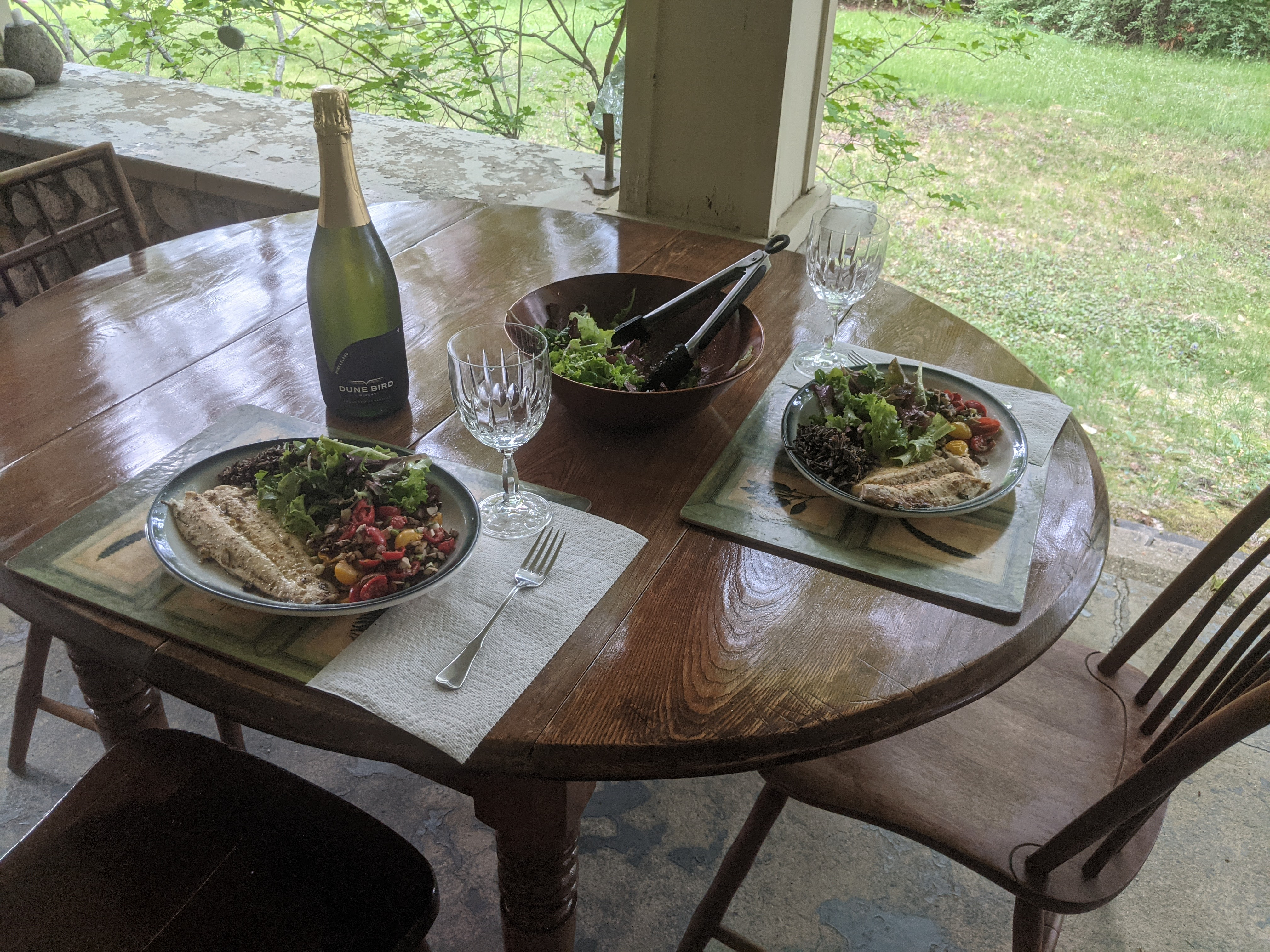
Great Lakes whitefish dinner with hearty veggies
Great Lakes whitefish is versatile and works with many variations of vegetables and coatings. This recipe makes preparing fish as simple as broiling it on a baking sheet.
Ingredients:
- Fresh whitefish fillet (1 pound is a good size for two people)
- Olive oil
- Dijon mustard (optional)
- Grape or cherry tomatoes (8 oz, halved)
- Green onions (8-10, diced, using entire onion)
- Portobello mushrooms (8 oz, loosely chopped)
- Mary’s Kitchen Port original gourmet blend seasoning (or your favorite fish seasoning blend)
- Coarse kosher salt or sea salt, to taste
- Freshly ground black pepper, to taste
- 1 Tbsp aged balsamic vinegar (optional)
Preparation:
- Line a large baking sheet with aluminum foil.
- Rinse and dry fillet and place in the middle of the baking sheet.
- Rub lightly with olive oil; add a thin coat of Dijon mustard, if desired.
- Spread the chopped vegetables around the fish, keeping the fish exposed.
- Set oven to broil at 500 degrees F. Place oven rack 6 inches below the broiler. You can pre-heat the oven but do not have to—as it warms, it helps cook the fish and vegetables. Total cooking time is usually 15 to 20 minutes, depending on the size of the fish.
- Place baking sheet on rack and set timer for 5-10 minutes.
- Check the fish with a fork. If it flakes easily to the bottom of the fillet, it is done; if it feels dense, give it a few more minutes.
- If the fish is done before the vegetables, remove the fish to your plates or onto a platter and return the vegetables to the oven. If the vegetables are done before the fish, remove them to a bowl and cook the fish for another minute or two. Stir a tablespoon of balsamic vinegar into the vegetables, if you’d like.
- Serve with your favorite rice and salad. I also like to have thinly sliced ripe avocado on the plate. For this recipe, I cooked wild rice in an Instant Pot, but you can also blend the wild rice with brown or black rice.
For my favorite salad:
I use Sisson’s Greek Dressing, a locally made bottled dressing available at Leland Mercantile Co. I always add Dijon mustard, dried basil, Parmesan cheese, fresh ground black pepper, and coarse sea salt.
Mix the dressing together at the bottom of the your favorite salad bowl, add local seasonal greens, and toss to combine. Top with freshly grated Parmesan cheese and serve.
 Freshwater Feasts