By El Lower, Michigan Sea Grant GLANSIS research associate
Every summer, Michigan meadows, forests, and gardens come alive with flowers – many of which aren’t just beautiful to look at, but which are delicious, too. Making floral cordial is a great way to preserve the flavor of the season: with just a few simple steps and a little patience, you can make a sweet, slightly fizzy syrup that’s perfect in sparkling water, lemonade, or cocktails that’ll last you until the weather turns cold again!
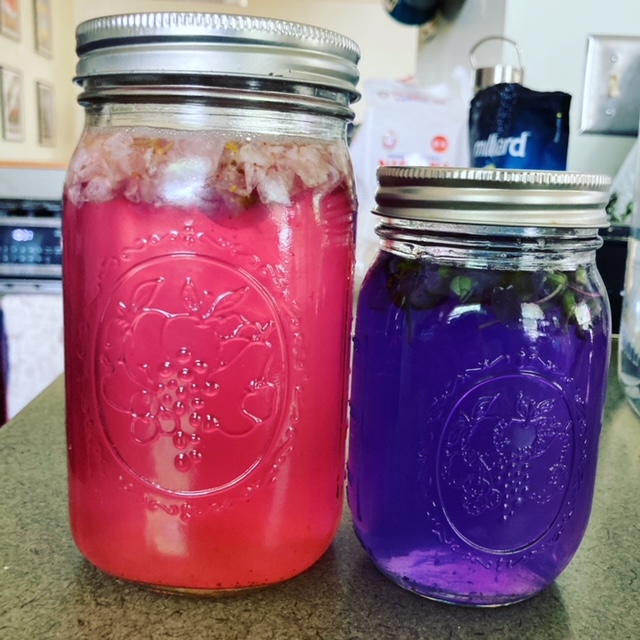
Many native and introduced species of flowers are edible and can be delicious additions to your home kitchen. Species I’ve enjoyed using are common lilac (Syringa vulgaris), common milkweed (Asclepias syriaca), multiflora rose (Rosa multiflora), spiderwort (Tradescantia ohiensis), Japanese or Amur honeysuckle (Lonicera japonica and Lonicera maackii), and elderflower (Sambucus nigra). Each one has its own lovely color and flavor: while spiderwort flowers don’t have a strong taste on their own, their vibrant purple color acts as a pH indicator, turning neon pink with exposure to acid like lemon juice. Common milkweed tastes like a summer meadow with a hint of sweet corn; elderflower tastes honey-like and tropical; and lilac, honeysuckle, and rose taste just like they smell. Picking multiflora rose and honeysuckle flowers is a net benefit for your local ecosystem, too – these invasive plants can aggressively out-compete native species, and harvesting their flowers prevents them from setting fruit that can be spread by birds to infest new areas later in the season.
As always, when harvesting plants for consumption, follow best practices for foraging: never harvest from an area close to roadways or that may have been sprayed with pesticides, don’t harvest more than a third of available plants from any one spot, and avoid using individual plants that are already hosting insects like caterpillars or beetles – bugs need to eat too! After collecting your flowers, I recommend spreading them on a cookie sheet outside so any small insects you may have harvested along with them can safely wander away. Knowing that your flowers haven’t been sprayed and sorting through them carefully is extra important, because for this recipe, you don’t wash them before using – we’ll be using the natural yeasts present on the petals to ferment the cordial and give it its probiotic fizz.
Michigan summertime floral cordial
Ingredients:
- 3 cups edible flowers (lilac, rose, honeysuckle, or others listed above)
- 2 cups sugar
- 5 cups water
- Mason jars or swing-top bottles for storage
Instructions:
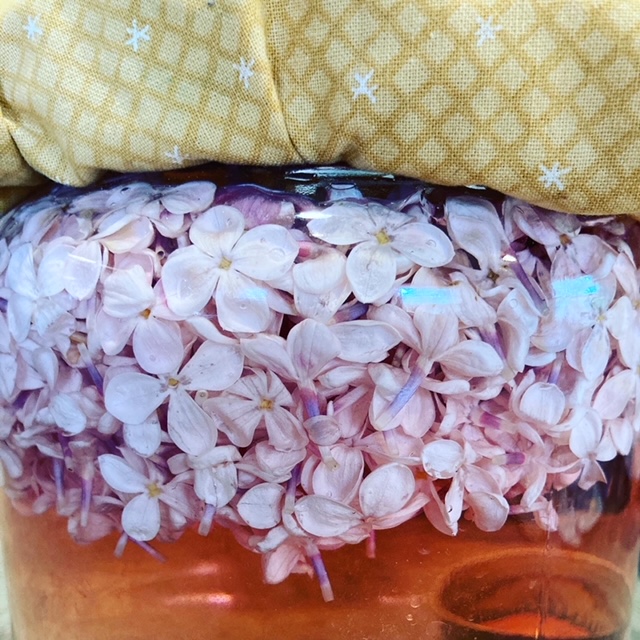
- Combine all ingredients in a large jar and stir until sugar has dissolved. Cover the mouth of the jar with cheesecloth or a clean kitchen towel secured with a rubber band.
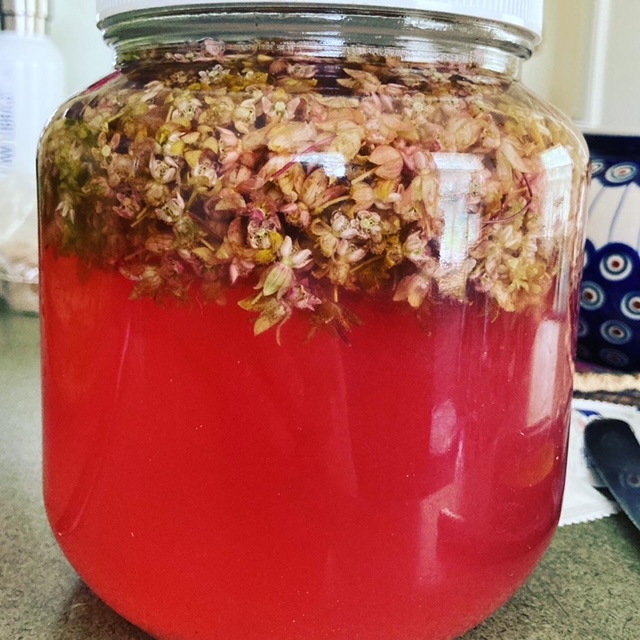
- Stir once a day for 3-5 days – fermentation is active when you see bubbles rising and the flowers are pushed to the top of the jar.
- Once the mixture is active, give it an extra day to ferment, then strain through a fine mesh strainer lined with cheesecloth or paper towel. Pour into clean mason jars or swing-top bottles and keep in the fridge – some fermentation will continue, and if the cordial is kept in a place that’s too warm, carbon dioxide can build up and cause your bottle to explode!
- Use your cordial in cocktails, lemonade, or as a flavoring agent for desserts like ice cream or baked goods, and enjoy the taste of summer!
 Freshwater Feasts