By Angela Gupta and Hana Kim, University of Minnesota Extension Forestry
Two University of Minnesota Extension Forestry team members reflect on fiddlehead fern foraging and family.

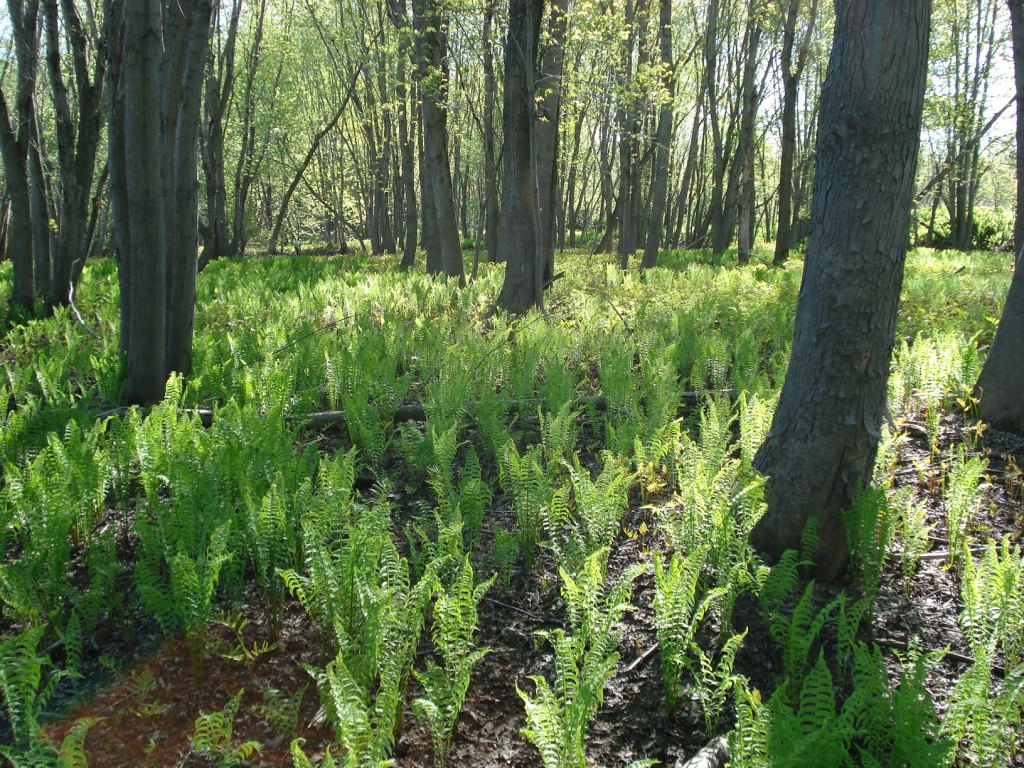
Angie: My parents’ yard is landscaped with ostrich ferns, Matteuccia struthiopteris, a common native understory plant in the hardwood forests of southeast Minnesota. I’ve transplanted a few to my yard where they’re slowly growing and spreading. I enjoy harvesting, cooking and eating this early spring treat. The emerging leaves are edible and called fiddleheads because the immature leaves are curled into shapes that resemble the head of a fiddle. While my family members aren’t foragers they’ll indulge my eccentricities and will try my foraged foods. Fiddleheads are a fun early spring treat we can all enjoy.

Hana: I don’t speak Hmong, and my grandmother doesn’t speak much English. Even with the language barrier, we still find ways to connect. One of them is through foraging. We don’t go very often, but I’m fond of the times my grandma has taken me out to look for fiddleheads. I’d follow her through the woods, watching as she carefully picked the right ones. For me, it was always more of a walk in the woods with my grandma, spending time together while doing something she enjoyed. The time spent foraging for fiddleheads is even more special because the season is so short and only comes once a year.
My grandma prepares the fiddleheads by boiling them until tender, then sauteing them with salt, garlic, and oyster sauce, a staple in any Hmong household. It’s a simple dish, but full of flavor.
I’m a hiker, camper, and educator, not so much a forager, so I connect with nature in a different way. But I admire how foraging is one of the ways my grandmother has formed a deep connection with the land. She has learned the plants and the value they hold for her while being able to spend time outside, which also has so many other benefits, like helping her stay active! I think foraging also helps her feel connected to her family and culture, just like it has for me. Spending time with my grandma foraging and sharing those meals have made me feel close to her without needing to say much.
As with all food foraging it’s critical to be confident in your plant identification, get permission to harvest from the landowner, and know how to properly prepare the foraged food. For details on identification, harvesting, and food preparation, check out this great University of Maine Extension website including 2 short videos.
 Freshwater Feasts