By El Lower, Great Lakes Aquatic Nonindigenous Species Information System (GLANSIS) communications specialist
As the weather warms, foragers look forward to the beginning of mushroom season, and oyster mushrooms (Pleurotus spp.) are among the first to arrive. Michigan is home to many species of oyster mushrooms, both native and introduced. Golden oyster mushrooms (Pleurotus citrinopileatus) are particularly beautiful and flavorful – and are unfortunately becoming invasive throughout the Midwest. Originally from northern Eurasian hardwood forests, this species was introduced to North America through DIY grow kits and commercial mushroom farms producing them for restaurants. While it’s still uncertain how this species escaped cultivation (theories range from accidental release of spores from a professional growing facility to well-meaning home gardeners composting their grow blocks and unwittingly spreading the mushrooms into their surrounding woodland), it’s becoming increasingly common to find large yellow clusters of these mushrooms across Michigan’s lower peninsula. If you happen to encounter them in your local woodlands, report your observation through iNaturalist to assist with research efforts in Michigan and across the country. You may also want to consider harvesting them to remove them from the area and stop them from spreading their spores further – and luckily, this species is absolutely delicious. (As always, when harvesting wild foods, consult with a reputable field guide, ensure a positive ID every time, and cross-check with resources such as MSU Extension’s “Don’t Pick Poison” bulletin.)
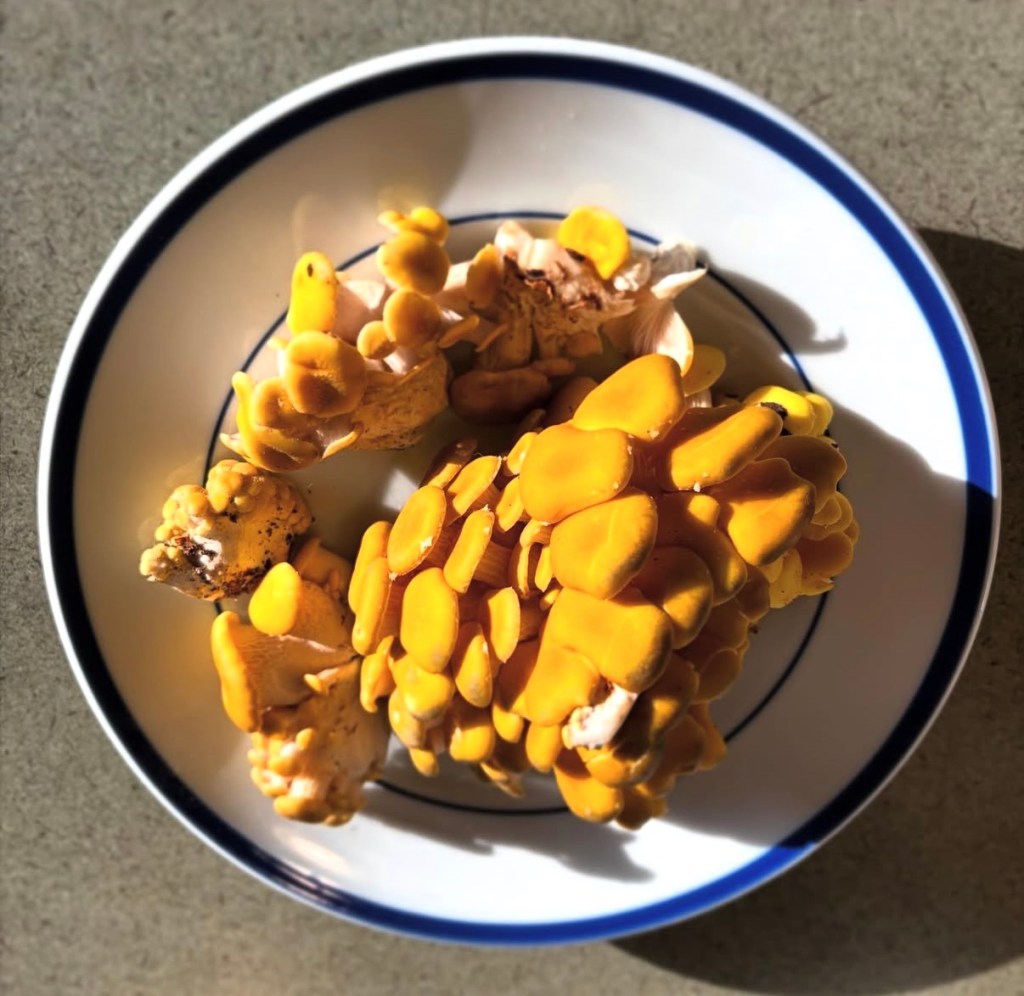
Golden oysters are widely-renowned for their striking color and nutty flavor, and take well to the same cooking techniques as any other oyster mushroom, from sauteeing to roasting to frying. One of my favorite methods for cooking oyster mushrooms of any kind is to bread and deep-fry them, much like actual oysters, to put on a New Orleans-style po’boy sandwich. Their tender, chewy texture makes for a wonderful seafood substitute.
Oyster mushroom po’boy sandwich
Ingredients (makes 2 sandwiches)
For the fried mushrooms:
- 1 lb of oyster mushrooms (all species aside from king oysters will work well here)
- 1 egg, beaten with a splash of water
- Cornmeal-based fish fry mix (I like Zatarain’s or Andy’s Cajun blend, but use your favorite brand or make your own from scratch)
- 2 cups neutral frying oil, such as sunflower or canola
For the po’boy sandwich:
- Soft french bread or sub rolls
- 1 tomato, sliced
- 3 lettuce leaves per sandwich
- Pickle slices
- Remoulade (storebought; or combine mayonnaise with lemon juice, pickle relish, horseradish, and a few dashes of hot sauce to taste)
Instructions
- Once your mushrooms are thoroughly cleaned and trimmed, dip them in a thin coating of whisked egg and toss them in the seafood fry mix until well-coated.
- Set a large skillet, wok, or cast-iron pan over medium heat, add oil, and let the temperature come up to 300-340 degrees F.
- Fry the mushrooms in batches, making sure not to crowd the vessel, for 6 minutes each (flipping once to ensure an even fry). Transfer the fried mushrooms to a wire rack or a bed of paper towels on a plate to drain the excess oil.
- While the mushrooms cool, assemble the sandwiches: add sliced tomato, lettuce, and a generous smear of remoulade to your bread, then add the fried mushrooms. Add a little extra lemon juice and/or hot sauce to taste and serve.
- Any leftover fried mushrooms can be reheated in an air fryer or with a brief trip back to the oven – the cornmeal breading stays much crispier than other kinds. I particularly enjoy them dipped in spicy mayo as a snack!

